Why This Site Exists
This site started as the home for one project: a proposed Maritime Industry Merit Badge for Scouting America. I'm now finalizing that proposal for Scouting America, with the help of many volunteers, but the need behind it, more young people finding their way into a maritime career, doesn't wait on a review process. So this page has grown into something a little broader: a guide for any Scout, Sea Cadet, Sea Scout, or curious youth who wants to start exploring the maritime industry.
Why the Maritime Industry Needs You
The U.S. is short on credentialed merchant mariners and skilled maritime professionals, and that shortage is where your opportunity is. Seamanship, navigation, marine engineering, shipbuilding, and port logistics are real, in-demand skills, and the U.S. Merchant Marine plays a direct role in national service. From the U.S. Merchant Marine Academy (USMMA) to the six State Maritime Academies, there's a clear, often fully-funded path from Scouting into a maritime career, if you know where to look.
“Sea power depends on people. A Scouting Badge that raises awareness of maritime careers helps build the workforce our nation needs: strengthening commerce, fueling opportunity, and securing our future.”
Where Things Stand
For the past several months, a volunteer working group (Scouters, academics, and maritime industry and trade-association professionals) has been drafting requirements and a paired Digital Resource Guide for the proposed Maritime Industry Merit Badge, following Scouting America's official Test Lab process. Scouting America approved the project to move forward through that process.
The draft requirements are complete: five requirement areas covering the industry, the ships and ports that run it, safety and stewardship on the water, who mariners actually work for, and real career pathways. Each is paired with vetted, Scout-facing digital resources so any Scout can complete it, wherever they live. That requirement and resource package is now being finalized for submission to Scouting America's Test Lab.
Next Steps
- Final compliance review against Scouting America's formatting and content standards.
- Submission of the requirement-and-resource package to Scouting America's Test Lab team for evaluation.
- Scouting America reviews the proposal against its New Merit Badge Review Criteria: mission alignment, relevance, educational value, age-appropriateness, accessibility, and engagement.
- If approved, the Maritime Industry Merit Badge would move toward being offered to Scouts nationwide.
What You'll Actually Do
Five requirement areas, each paired with real digital resources so you can work through them on your own, wherever you live. This is the current draft, submitted to Scouting America's Test Lab for review, and it is not yet an official badge.
1Maritime Basics
The big picture: what the industry actually is, and how it touches your life every day, from the food in your fridge to the gas in your car.
2Ships, Ports, and Marine Operations
The ships themselves, the people who run them, how a port works, and the physics behind why a loaded ship floats.
3Maritime Safety and Stewardship
Real safety practices, a hands-on signaling exercise, and the environmental rules that keep commerce and clean water compatible.
4Maritime Education and Service Pathways
Who actually works these jobs and who they work for, plus the real routes in, from a four-year academy to a union apprenticeship.
5Careers
Research one maritime career in depth, talk to someone doing it, and make the case for it to another Scout.
⬇ Download the Full Draft Requirements (PDF)
Start Here, Wherever You Are
Pick the description that fits you best.
New to Scouting, or Just Curious
- Look for a Sea Scout ship or Naval Sea Cadet Corps unit near you.
- Visit a maritime museum or a ship open house to see the work up close.
- Ask your Scoutmaster about related merit badges: Small Boat Sailing, Motorboating, Rowing, Canoeing.
Already a Sea Scout
- Work the ranks: Ordinary → Able → Quartermaster.
- Log your sea time on ship outings. It matters later for credentials and applications.
- Ask your Skipper about USMMA and State Maritime Academy info sessions and congressional-nomination timelines.
Already a Sea Cadet (NSCC)
- Advance in rank and sign up for summer trainings, which build directly toward a maritime career.
- NSCC has established pipelines into USMMA, the State Academies, and the service academies.
- Talk to your Commanding Officer about maritime career counseling.
Ready to Commit to a Maritime Career
- U.S. Merchant Marine Academy (USMMA): tuition-covered, congressional nomination plus medical/fitness standards, commissions officers for the merchant marine and Navy Reserve.
- The six State Maritime Academies: similar training with state-based admission.
- Union apprenticeships (MM&P, MEBA, SIU): learn while you earn, no four-year degree required.
- Enlisted route: earn your Able Seaman (AB) credential and start sailing directly.
Growth sectors worth knowing about: offshore wind support vessels, green fuels, and modern shipbuilding/repair.
Special Thanks
This project wouldn't exist without the help of these team members.
Captain Lauren Beagen
Founder, The Maritime Professor
Licensed maritime attorney and U.S. Coast Guard-credentialed captain; a recognized expert in ocean shipping and supply-chain logistics, and former Attorney-Advisor at the Federal Maritime Commission.
CAPT James R. Zatwarnicki Jr.
Associate Dean for Faculty & Associate Professor, Dept. of Marine Transportation, USMMA; President, Liberty Nautical Education Center (LINE)
Oversees faculty affairs at USMMA and leads the Liberty Nautical Education Center, home of Sea Scout Ship 228.
Dr. Matthew Bonvento
Assistant Professor, Dept. of Marine Transportation, USMMA
Worked on the badge's marine transportation requirements as a Working Group member.
Dr. Keith Aksel
Assistant Professor of History, USMMA
Brought historical grounding to the badge's requirements, including the maritime industry's role in national service.
Prof. Thomas Callahan
Assistant Professor, Dept. of Marine Engineering, USMMA
Provided marine engineering expertise for the badge's technical requirements.
Captain Jamie McNamara
Claims Executive, American Club (P&I)
Sails an Unlimited Master's license out of a career spanning tankers, dry bulk, and container/RoRo operations; previously HSQE Manager at McAllister Towing, and a SUNY Maritime College graduate active on its Alumni Association Board.
A Bit About Me
This effort began with a recent graduate of the United States Merchant Marine Academy, John Smolenski. His experience as an Eagle Scout, Sea Scout, and Chief Petty Officer in the U.S. Naval Sea Cadet Corps helped him identify the gap that exists for youth in this country to learn about the maritime industry. If you need help navigating USMMA, a state maritime college, or another service academy, or you're just interested in the maritime industry in general, reach out: email maritimebadge@gmail.com.
"Tell America": My USMMA Valedictorian Speech
My commencement address at USMMA's outdoor ceremony on the Kings Point field centered on Cadet-Midshipman Edwin O'Hara, the SS Stephen Hopkins, the Merchant Marine's WWII casualty rate, and calls to action including the Jones Act, the SHIPS for America Act, and a posthumous Medal of Honor for O'Hara.
▶ Watch "Tell America" on What's Going On With Shipping
The next chapter of America's maritime industry is yours to write.
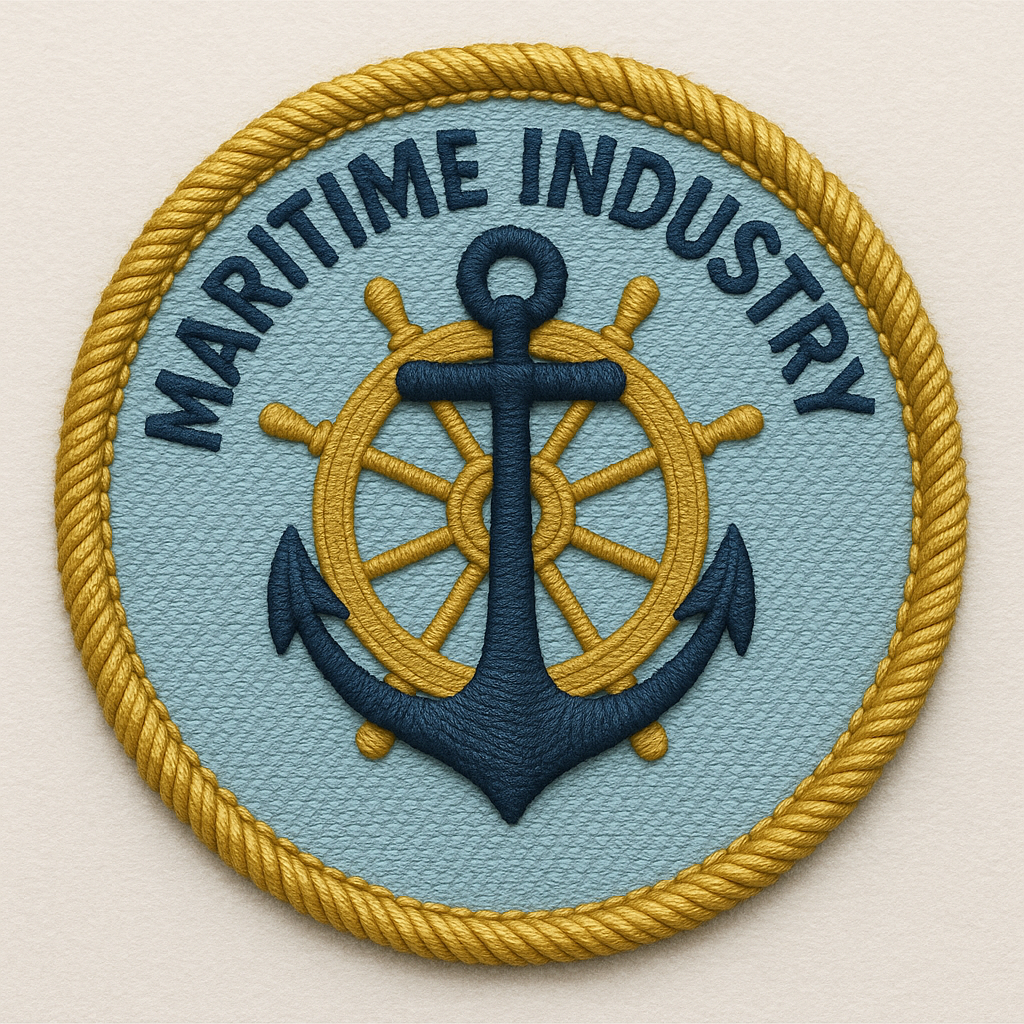 Maritime Industry Merit Badge